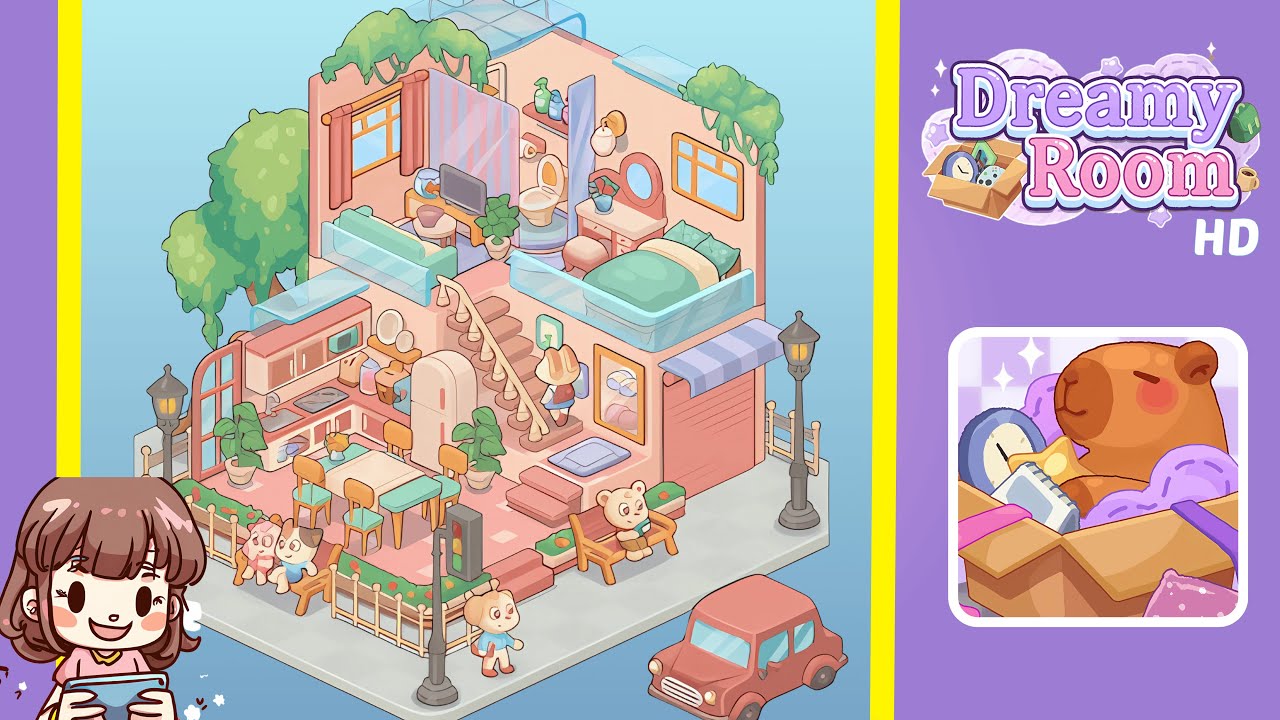
Dreamy Room Level 349 Walkthrough
This walkthrough guides you through assembling the charming two-story isometric house in Dreamy Room Level 349, filled with intricate details and decorative elements.
Step-by-Step Guide
- Place the base platforms and walls (foundation). Begin with the large tiled platforms and backing walls that form the two-story shells. Start with the ground base tile (light grey patterned) centered on the grid, aligned with the sidewalk. Position the lower-left raised pink platform (kitchen/dining area) flush to the left front corner, the central mid-height platform (stair landing and living nook), and the upper-right platform (bedroom and bathroom) elevated above the central platform. Attach the tall back walls: left behind the upper living area, right behind the bedroom. Ensure precise alignment for the stairs to snap into place later. Double-check edge matching and platform heights to avoid repositioning later.
- Install the central staircase, landing mat, and framed art. Place the wooden staircase centrally against the mid-height platform's front edge, ascending to the upper level. Position the small entrance mat at the base of the stairs, aligned with the first stair tread. Add a framed square picture on the inner wall beside the stairs’ bottom. Ensure the mat and frame line up with the stair axis, and confirm the handrail direction and landing clearances for upcoming furniture.
- Build the kitchen along the left wall (cabinets, sink, stove, fridge). Place a long kitchen counter along the left interior wall, with the sink under the left-side window. Position the stove and two-burner cooktop right of the sink, upper cabinets and microwave above, and refrigerator at the back edge near the stairs. Add small countertop items: a kettle, jar, and toaster. Ensure precise alignment to maintain kitchen compactness and proper dining table clearance.
- Set the dining area and planters (table, chairs, flowerbed). Place the mint dining table on the front-left patio space (pink tiles) with four matching chairs — two on the long sides, one at each end if possible. Encircle with low wooden fence pieces and rectangular flower planters, and a vase with flowers on the table. Add a streetlamp on the exterior curb, near the front platform's left corner. Ensure the fence and planters align with the gaps and the sidewalk.
- Arrange the living area furniture (sofa, TV, coffee table, plant). In the living nook, place the mint sofa facing the central area. Position the low TV stand on the recessed ledge opposite the sofa, with the TV screen centered and a fishbowl to the left. Add a round coffee table with a decorative bowl in front, and a medium potted plant near the sofa’s right arm. Maintain symmetrical spacing for visual balance.
- Position the bedroom and vanity upstairs (bed, dresser, mirror). On the upper-right platform, set the bed along the right back wall under the window, with a bedside rug in front. Position the dresser/vanity left of the bed against the back wall, with a circular mirror above and a small stool underneath. Add a potted flower on the dresser. Ensure the bed doesn't extend past the railing line for neatness.
- Fit the bathroom elements (shower, toilet, shelves, toiletries). Inset slightly to the upper-right, place the rounded glass shower at the inner corner, the toilet beside it, and a small shelf above stocked with bottles. Add a wall sconce between the shower and dresser area. Ensure proper orientation for interaction and stagger toiletries on the shelf.
- Add outside street details (benches, teddy characters, traffic light, car). Place two wooden benches on the front edge: one in the left-front with two teddy characters, another in the right-front with a lone teddy holding a book. Position a traffic light near the middle front step and a lamp post at the right corner. Park a red car on the right-front curb. Maintain spacing behind the fence line and align with tiles.
- Plant trees, hanging vines, and glass railings. Position a tall leafy tree cluster behind the left exterior wall, drape vines along upper wall edges, and install glass railings around both upper platforms to prevent floating objects. Ensure greenery tucks behind walls and railings snap to platform edges.
- Place small accents and character animation triggers. Add curtains on the left upper window, a round mirror by the dresser, a doormat at the garage door, framed art near the stairs, and kitchen accessories on shelving. Position the walking character mid-step on the staircase and idle NPCs on benches. Perform final checks against reference for realism.
Notes & Precautions
- Always work from the foundation up; moving entire platforms later disturbs item placements.
- Confirm platform heights early to avoid misalignments.
- Provide a one-tile clearance for interactive objects to avoid blocking character movement.
- If placement fails, try nudging the object one grid unit.
- Save often during complex rearrangements to avoid extensive redos.
- Ensure transparency and layer order for railings and objects.
- Verify alignment of stairs and upper platforms to prevent repositioning decorative pieces.
Tips & Tricks
- Work in zones: focus on the kitchen/dining, then living/stairs, then upstairs.
- Group similar items in your inventory for rapid drag-and-drop.
- Utilize the preview overlay to check alignment before committing.
- Temporarily rotate large objects to place small items, then return them to position.
- Save custom placement templates for reuse across levels.
- Balance color blocks: alternate mint and pink to prevent visual heaviness.
- Verify clear focal points from the front view.